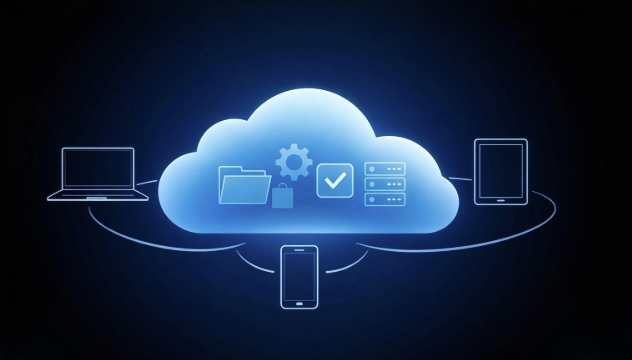

Cloud computing offers on-demand access to computing resources over the internet, backed by scalable infrastructure. It provides servers, storage, databases, and software through IaaS, PaaS, and SaaS, enabling organizations to pay for what they use. The approach emphasizes resilience, efficiency, and cost transparency, while shifting focus from hardware to outcomes. It presents practical benefits and real-world scenarios, yet questions remain about choosing the right model and managing risk as needs evolve. The next step clarifies where one fits.
What Is Cloud Computing, and Why It Matters
Cloud computing is a model for delivering computing resources—such as servers, storage, databases, networking, software, and analytics—over the internet on demand. It enables organizations to operate with freedom, focusing on outcomes rather than infrastructure. This approach supports cloud budgeting by optimizing cost visibility and control, while portable scalability ensures resources expand or shrink with needs, promoting resilience and service-oriented agility.
How Cloud Services Are Structured (IaaS, PaaS, SaaS)
Different service models organize cloud capabilities into distinct layers: Infrastructure as a Service (IaaS) provides foundational compute, storage, and networking resources; Platform as a Service (PaaS) builds on that foundation to deliver runtime environments and development tools; Software as a Service (SaaS) offers ready-to-use applications accessed over the internet.
This cloud architecture emphasizes scalable, resilient, service-oriented delivery through clearly defined service models.
Key Benefits and Real-World Use Cases
What tangible benefits do organizations gain from cloud adoption, and how do real-world use cases illustrate these gains?
The narrative highlights scalable resources, resilient deployments, and service-oriented architectures enabling faster time-to-value. Cloud benefits include cost transparency through cloud pricing, flexible capacity, and streamlined operations. Real world use cases demonstrate secure access, measurable efficiency, and value-driven innovation, guided by security considerations.
Common Myths, Risks, and How to Choose the Right Cloud Option
Organizations moving to the cloud must navigate common myths, inherent risks, and the criteria for selecting the most suitable option. This analysis distinguishes myth vs reality, clarifying expectations around scalability, cost, and governance. It addresses security misconceptions, emphasizes shared responsibility, and guides decision-makers toward a tiered, service-oriented approach that aligns with resilience, control, and freedom to adapt across environments.
Frequently Asked Questions
How Do Cloud Services Affect Data Sovereignty and Localization?
Data residency and data sovereignty influence cloud service choices by imposing jurisdictional requirements and localization needs; scalable, resilient architectures route data to compliant regions, enabling freedom while honoring laws, client policies, and cross-border data handling in a service-oriented model.
What Are Hidden Costs in Cloud Pricing Models?
Hidden costs lurk in cloud pricing models, quietly inflating bills as usage scales; awareness and governance prevent surprise charges, ensuring a scalable, resilient, service-oriented approach that respects user autonomy while monitoring all consumption and adjustments.
Can I Migrate Legacy Apps to Cloud Without Refactoring?
Yes, it’s possible to migrate legacy apps without refactoring, though constraints exist. How to migrate legacy involves assessing cloud compatibility, legacy constraints; success hinges on compatible architectures and risk-aware, refactoring-free strategies that preserve service-oriented freedom and scalability.
How Does Cloud Downtime Impact Regulatory Compliance?
Cloud downtime can pose regulatory impact by interrupting audits, data access, and records retention. A scalable, resilient, service-oriented approach minimizes risk, maintaining traceability and controls during outages while preserving compliance posture and auditable evidence for freedom-focused organizations.
See also: City Data Analytics Explained
What’s the Role of Edge Computing in Cloud Strategy?
Coincidence unveils: edge computing shapes cloud strategy by edge optimization and latency reduction, enabling scalable, resilient, service-oriented architectures while respecting data sovereignty, empowering teams to pursue freedom; the role harmonizes distributed processing with centralized governance and compliance.
Conclusion
Cloud computing steadily scales operations with on-demand resources, reducing upfront costs and enabling faster innovation. In practice, organizations migrating to cloud services often see suspending capital expenditure and shifting to operating income, while ensuring reliability through elastic architectures. An telling stat: global cloud spending is projected to reach over $1.5 trillion by 2026, underscoring adoption and resilience. For informed choices, align options (IaaS, PaaS, SaaS) with specific workloads, risk tolerance, and measured performance targets.

 By
By