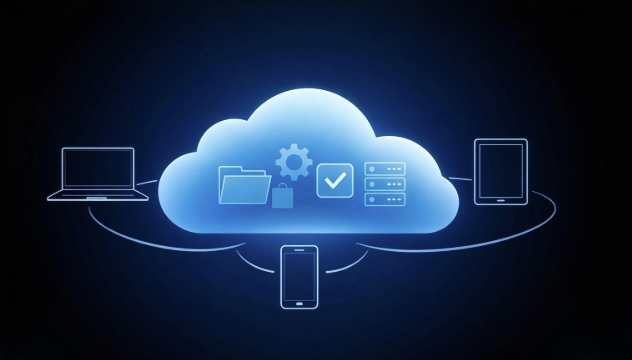

Cloud backup solutions are assessed through architectural rigor, cost discipline, and resilience. The discussion weighs total cost of ownership, latency, and throughput against strong access controls and verifiable certifications. Data sovereignty, immutable storage for ransomware resilience, and granular recovery with cross-region redundancy shape the framework. Transparent pricing and auditable governance are favored to avoid vendor lock-in while enabling scalable, geo-aware protection. The framework invites further examination of practical decision criteria and real-world tradeoffs.
What Cloud Backup Solves for You
Cloud backup solves the core tension between data permanence and operational risk. It provides structured, recoverable archives that align with architectural rigor and data sovereignty. The solution emphasizes cloud reliability, ensuring continuous access, while preserving sovereignty through geo-aware storage controls. Costs are transparent and scalable, guiding decisions toward freedom from vendor lock-in and toward resilient, auditable, and compliant data governance.
How to Compare Price, Speed, and Security
Assessing price, speed, and security requires a disciplined framework: compare total cost of ownership, measured latency and throughput, and access controls backed by verifiable certifications. In this framework, price benchmarking informs value while maintaining architectural rigor; data encryption safeguards remain central to trust. Decisions balance cost-awareness with freedom to choose, anchored by transparent metrics, verifiable standards, and scalable performance.
Best-Fit Backup Strategies by Use Case
What use-case–driven backup strategies best align with organizational risk profiles and data sovereignty requirements, delivering architecture-aligned choices that optimize cost and resilience? The analysis emphasizes data taxonomy and metadata governance to enable precise recovery scopes. Ransomware resilience emerges through immutable storage, granular restoration granularity, and cross-region redundancy, preserving continuity while honoring sovereignty constraints and freedom to adapt architectures without vendor lock-in.
Choosing a Provider: A Practical Decision Framework
This decision framework translates organizational risk posture and data sovereignty constraints into concrete provider criteria, emphasizing architectural alignment, cost discipline, and operational resilience.
The framework scrutinizes data sovereignty considerations, insisting on governance parity, explicit data location, and regulatory alignment.
It favors transparent pricing and cost transparency, enabling disciplined budgeting, auditable decisions, and adaptive scalability while preserving freedom to align with strategic, resilient cloud backup objectives.
Frequently Asked Questions
How Do Backups Affect Data Sovereignty and Compliance Requirements?
Backups influence data sovereignty and compliance requirements by dictating data location, access controls, and audit trails; hidden costs arise from cross-border transfers and regulatory obligations. The approach emphasizes architectural rigor, cost-awareness, and freedom to choose compliant, sovereign storage solutions.
What Are the Hidden Costs Beyond Advertised Prices?
A hypothetical midmarket retailer encounters hidden fees such as data egress, API calls, and long-term retention surcharges, revealing that unintended costs escalate after initial quotes. These hidden fees and vendor lock-in undermine architectural rigor and freedom.
How Is Data Restored in Disaster Recovery Scenarios?
Data restoration in disaster recovery relies on recovery testing and restore validation to confirm operability, with architectural rigor guiding processes, data sovereignty considerations, and cost-awareness shaping resource usage, ensuring freedom to recover promptly while maintaining compliant, auditable procedures.
Which Backup Methods Best Protect Against Ransomware?
Ransomware containment hinges on immutable backups, enabling rapid restoration while preserving data sovereignty and cost-awareness; robust segmentation and offline storage thwart attacks, ensuring recoverability. The approach is architectural rigor, balancing resilience, governance, and freedom from vendor lock-in.
See also: City Data Analytics Explained
What Operational Impacts Do Backups Have on Workflows?
Backups introduce workflow latency and require defined restore windows, shaping operational cadence. They impose governance considerations, preserve data sovereignty, and drive cost-aware planning, while preserving freedom to innovate; architecture minimizes disruption, enabling resilient, self-directed workflow autonomy.
Conclusion
Cloud backup solutions must be judged by architectural rigor, cost discipline, and resilience. A defensible conclusion emphasizes transparent pricing, auditable governance, and cross-region, immutable storage to curb ransomware. An interesting statistic: organizations adopting immutable, geo-redundant backups reduce ransomware recovery time by up to 80% and support data sovereignty compliance more reliably. The takeaway is to select providers offering granular recovery, verifiable certifications, and vendor-agnostic APIs that enable scalable, compliant architectures without lock-in, while maintaining predictable TCO.


 By
By